
Staub vs. Le Creuset: Our Cooking School’s Comparison
If you’ve ever wondered whether a Staub or Le Creuset Dutch oven is better? It’s one of the most common questions we hear from students stepping into our kitchen. Since we use both daily—often side-by-side—we’ve gathered years of observations. Here’s our friendly, honest guide to help you choose the right enameled cast-iron pot for your cooking style.
Stewing: Staub’s Moisture Retention Shines
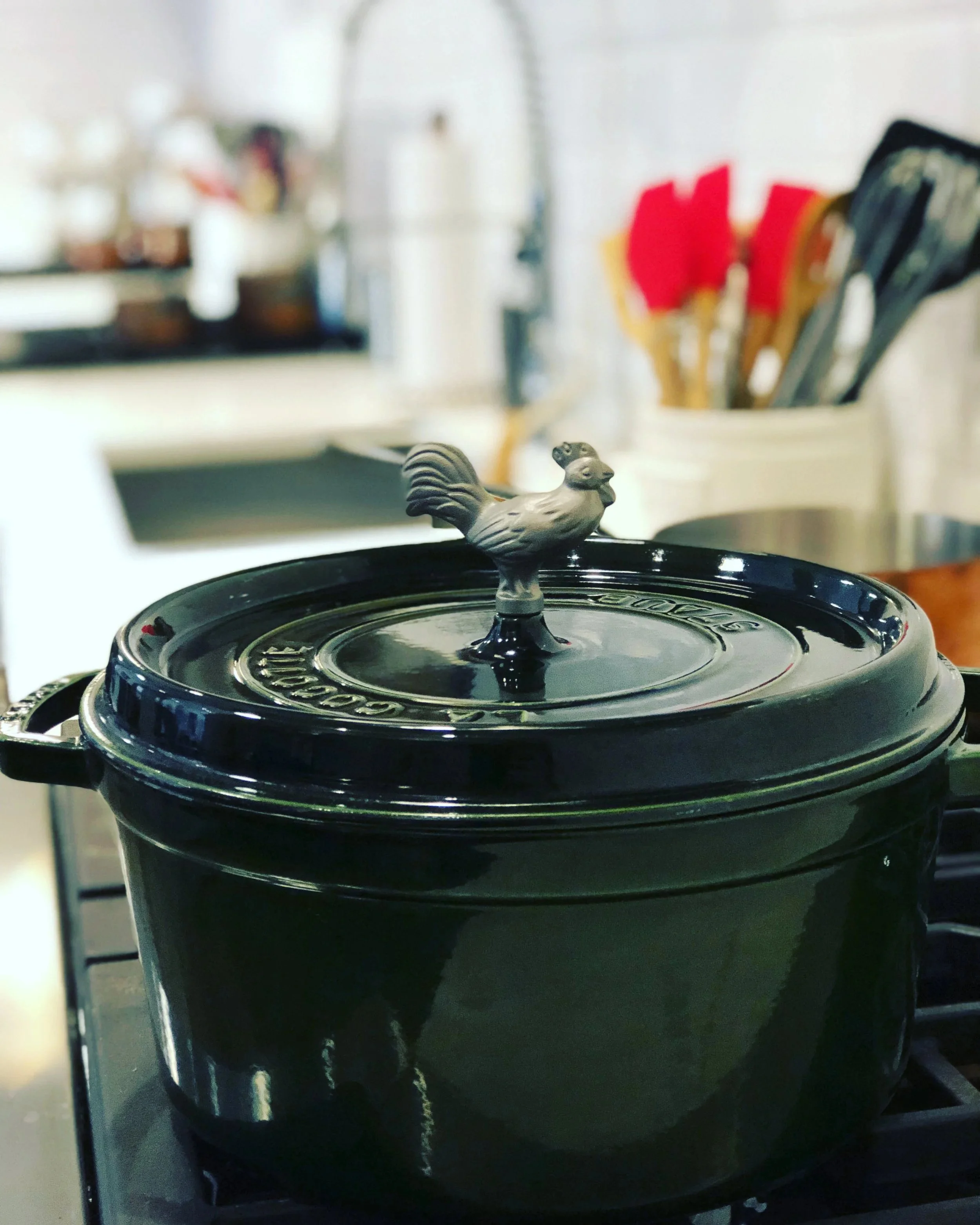
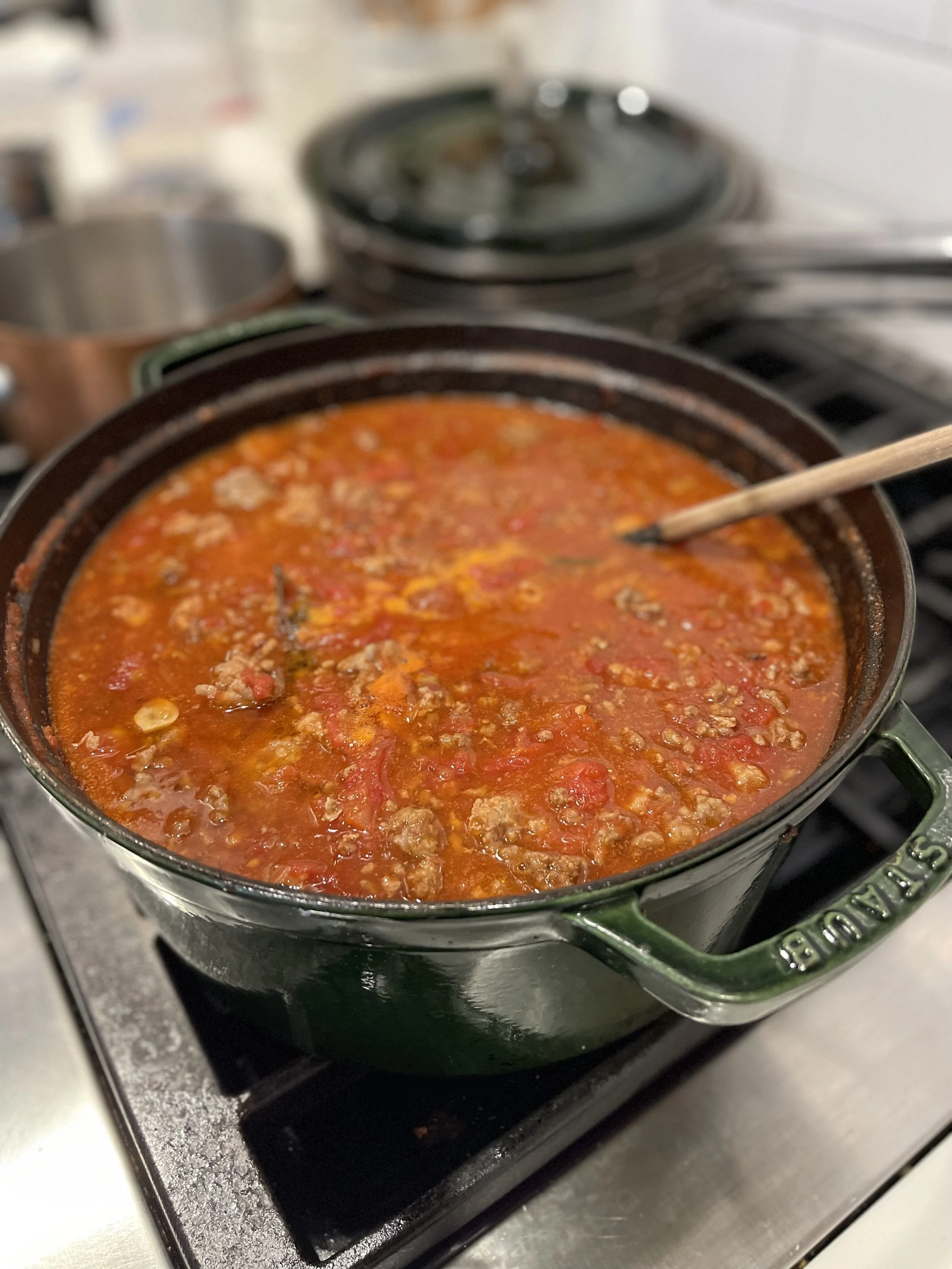
When we’re stewing, which means cooking with a generous amount of liquid, Staub consistently gives us the best results.
Its tight-fitting lid and matte black enamel help lock in moisture, which creates the ideal environment for slow, gentle softening of tough cuts of meat.
In class, we often use Staub for:
short rib ragù
beef bourguignon
If we want to reduce the liquid later, we simply remove the lid and let the magic happen.
Braising: Le Creuset’s Lid Helps You Reduce Faster
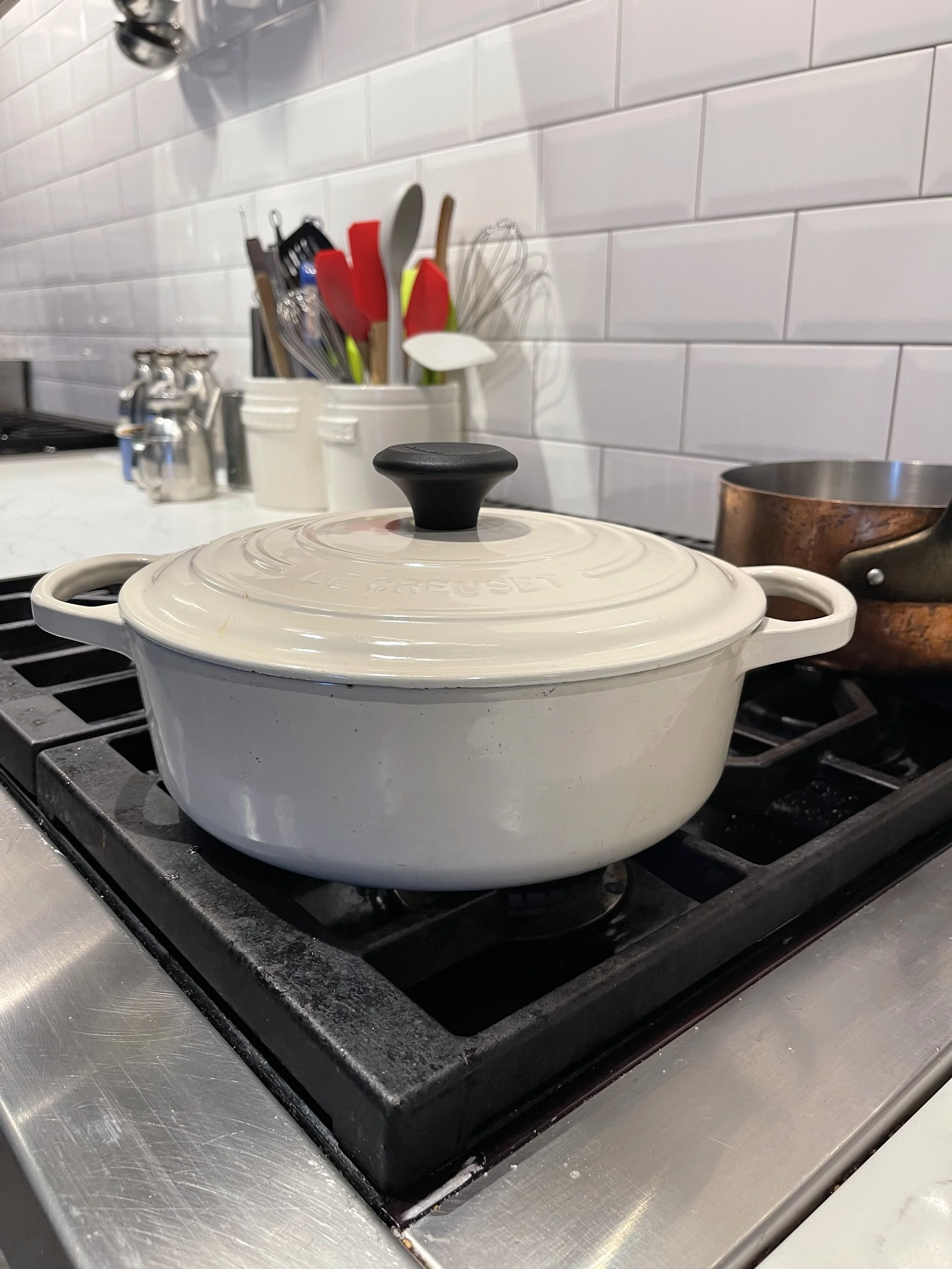
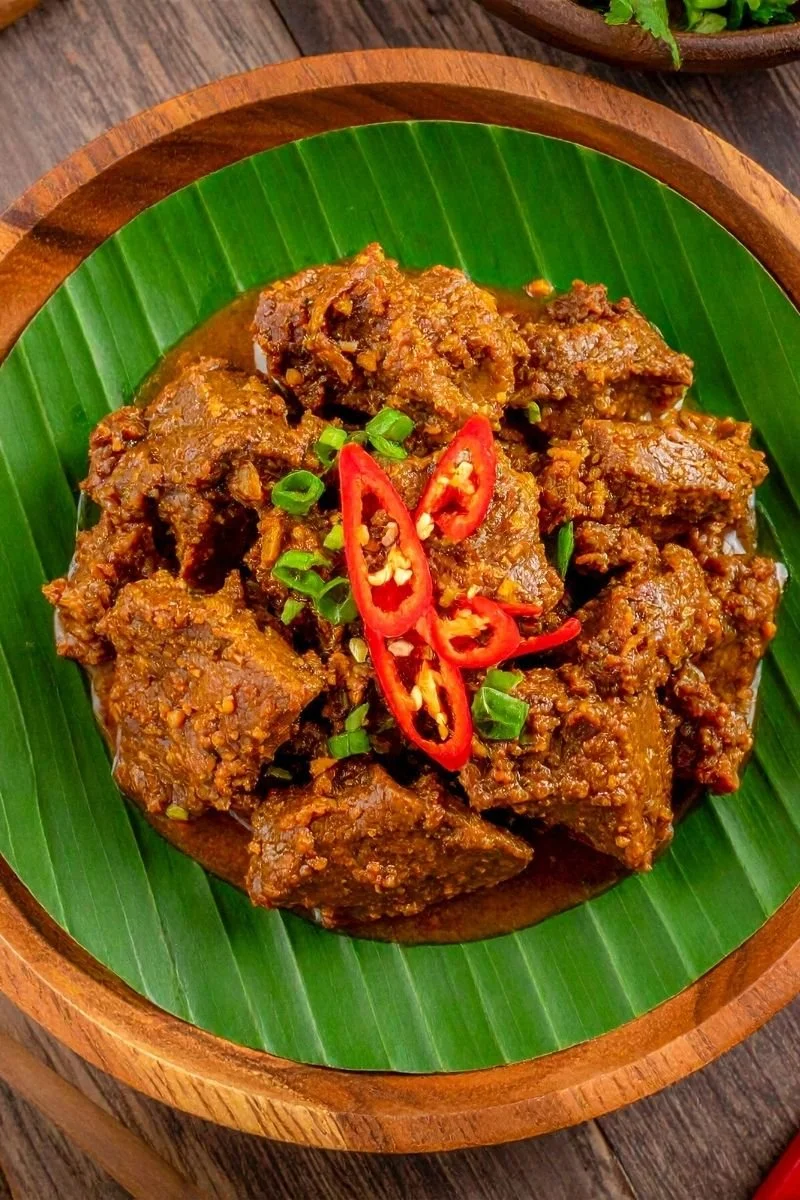
For braising, where moisture reduction is essential, Le Creuset comes out ahead. The lid is slightly lighter, allowing more steam to escape.
This helps sauces tighten and deepen in flavor more quickly.
A favorite example from our Southeast Asian class is:
beef or chicken rendang, where coconut milk and spices cook down until nearly dry
Beyond Braising: Slow-Cooked Favorites
Dutch ovens aren’t just for stews and braises. They’re incredible for a wide range of slow-cooked dishes. Here’s where each pot stands out:
Bolognese or Chili
Staub keeps long-simmered sauces moist and velvety.
Le Creuset reduces faster, great for a thicker, more concentrated finish.
Pot Roast
Once transferred to the oven, between 275°F–325°F (135°C–163°C):
Staub creates a steam-rich environment for ultra-tender meat
Le Creuset encourages browning and flavor concentration
Think of it as juicy vs. deeply caramelized—neither is wrong; it’s preference.
From Stovetop to Oven: Temperatures to Know
Most of our long-cooking dishes begin on the stovetop and finish in the oven at 280°F–300°F (138°C–149°C).
Both brands handle this beautifully.
A small but important detail:
Older Le Creuset lids use a black phenolic knob, made from a heat-resistant resin safe up to 390°F (200°C).
If you’re baking at higher temperatures—especially 450–500°F (232–260°C) for bread—you’ll need a stainless steel knob.
Staub comes with a metal knob by default, so it’s bread-ready from day one.
Jam & Preserving: Staub’s Consistency Wins
This comparison surprised even us.
During our Jam & Preserving classes, we discovered that Staub outperforms both Le Creuset and even our beloved copper jam pot.
Here’s why: It takes longer to reach a boil, but once it’s hot, the heat is steady and predictable, no constant stirring required.
Le Creuset heats faster, which is great for searing meat—less great for sugar, which can easily catch on the bottom.
Bread Baking in a Dutch Oven
If you’re here because of sourdough—welcome. Dutch ovens make spectacular bread because they trap steam and create a crisp, crackly crust.
Staub: oven-safe metal knob, ready for high heat. And height-wise slightly taller.
Le Creuset: needs stainless steel knob for 450°F+ baking. The bottom of the loaf does get a little darker.
Both: excellent crust and oven spring
So… Which One Do We Reach For Most?
If we had to choose just one, we’d choose Staub.
The consistent heat, tight lid, and steam retention make it unbeatable for the dishes we cook most often—stews, beans, braises, jams, and long-simmered sauces.
But if you love reductions, drier braises, or fast browning?
Le Creuset is a joy to cook with and may be a better match for your style.
Which One Is Easier to Clean?
This might be the most common follow-up question—and the honest answer is:
Ease of cleaning depends more on cooking technique than the pot itself.
Head over to the post about Cooking in the Enameled Cast-Iron Dutch oven post.
Choosing the right Dutch oven isn’t about which brand is ‘best’—it’s about which one matches the way you like to cook.